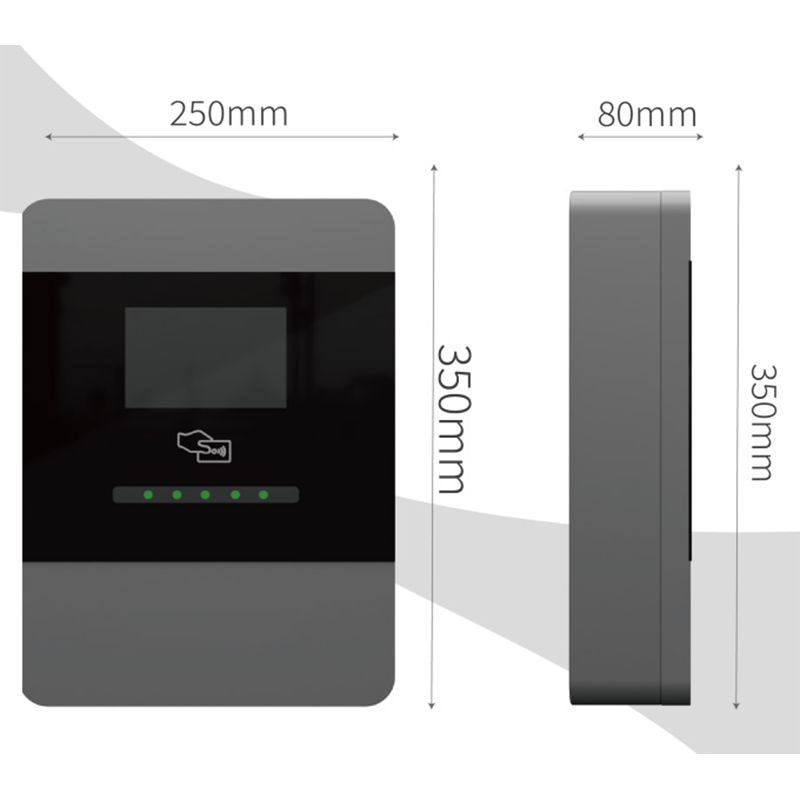
Product technology continues to evolve, with the new generation of AC EV charging stations featuring enhanced smart safety capabilities.
2026,09,28
AC EV charging stations are undergoing a wave of upgrades focused on intelligence and safety, with safety protection, human-machine interaction, and remote management emerging as key areas of product evolution. While traditional AC chargers offered only basic start/stop functionality, new-generation models integrate multiple safety mechanisms—including automatic power-off features for over-voltage, under-voltage, leakage, over-temperature, lightning surges, and short circuits—to mitigate electrical risks at the hardware level.
In terms of intelligence, these new chargers feature IoT modules that support cloud-based backend management. Property managers and site operators can centrally manage multiple units via a unified platform—monitoring charging status, energy consumption statistics, and fault alerts, as well as remotely locking or unlocking devices—thereby significantly reducing the operational workload. On the user side, the systems support card swiping, QR code scanning, and app-based scheduling; some models even incorporate Bluetooth connectivity to enable "plug-and-play" functionality.
Hardware design and aesthetics have been optimized in tandem; the casings utilize flame-retardant, aging-resistant materials that offer superior environmental adaptability, ensuring stable operation in regions characterized by extreme cold or high heat and humidity. The product lineup includes both wall-mounted and pedestal-mounted versions: wall-mounted units save space in indoor garages, while pedestal units are typically deployed in outdoor public parking areas.
As industry standards evolve, stricter requirements regarding electromagnetic compatibility (EMC), grounding protection, and communication protocols are compelling manufacturers to refine their circuit designs. Far from being mere charging devices, these AC chargers serve as terminal units within the smart grid; some models support time-of-use (TOU) pricing and are capable of participating in future demand-response programs. Continuous technological iteration is enhancing product reliability, further solidifying the market position of AC EV charging solutions in residential communities, industrial parks, and commercial parking facilities.